
Care library › Orange-winged Amazon
Care guide
Orange-winged Amazon
Amazona amazonica
A medium-large South American parrot: green, loud, clever, and capable of living for sixty years. Amazons are affectionate, playful and great talkers, and they are also the parrot most often surrendered when the noise, the hormones and the decades of commitment turn out to be more than a household planned for. This guide is for people deciding honestly whether an Amazon fits, and for people who already have one and want it to thrive.
- Size12–13 inches
- Lifespan50–70 years
- Weight300–470 g
- HousingFlock bird, needs daily company
- LevelAdvanced
1. Natural History
- Range: Lowland forest, mangrove and savanna woodland across the Amazon basin and northern South America. Flocks roost communally in the hundreds and travel many miles a day to feed.
- What that means at home: A bird built to fly miles, shout across a forest and spend every waking hour with its flock is now in your living room. Noise, activity and a need for company are not behaviour problems; they are the species.
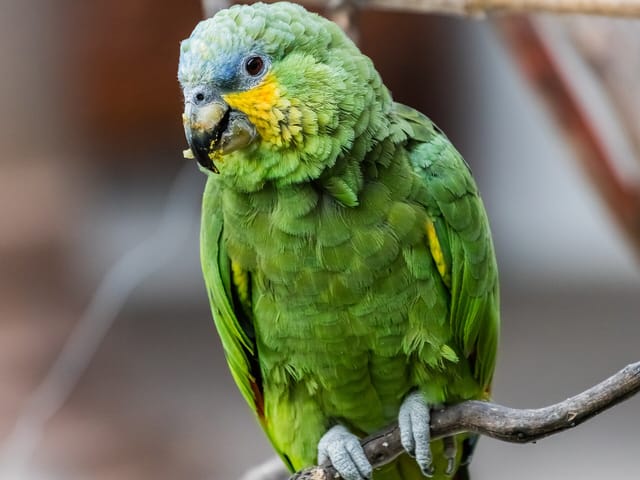
- Identification: Orange patches on the wing (visible in flight), blue and yellow on the face, and a horn-coloured beak. Often confused with the blue-fronted Amazon.
2. Before You Commit
- Lifespan: An Amazon bought at 20 can outlive its owner. Write it into your will, and have a named person who has agreed to take the bird.
- Noise: Dawn and dusk screaming sessions are normal and loud enough to be heard through walls. Apartments and shared walls usually end in a surrender.
- Time: Three or more hours a day out of the cage, in the room with you, is the realistic minimum for a bird that will not pluck or scream for attention.
- Adopt first: Rescues and rehoming groups always have adult Amazons. An adult's personality is already known; a weaned baby's is a gamble.
3. Housing
- Cage: 36 × 24 × 48 inches is a sensible minimum for one Amazon, with bar spacing of 3/4 to 1 inch and plenty of horizontal bars for climbing. Width matters more than height.
- Placement: In the family room, against a wall, out of the kitchen, away from drafts and direct sun through glass. Not the garage, not a spare bedroom.
- Perches: Natural branches of varying diameters (manzanita, java, apple), a rope perch and one rough grooming perch. Remove dowel and sandpaper perches.
- Playstand: A separate stand with toys in the room where the family is, so out-of-cage time is not just sitting on a shoulder.
- Sleep: 10–12 hours of dark, quiet sleep. A cover, or a smaller sleep cage in a quiet room, prevents the overtired, hormonal, screaming bird.
4. Diet
- Pellets: 60–70% of the diet, a formulated pellet from a reputable maker (Harrison's, Roudybush, TOPS, Zupreem natural). This is the biggest single thing you can do for an Amazon's health.
- Vegetables: 20–30%: leafy greens, peppers, carrot, squash, broccoli, sweet potato, green beans, peas, corn in moderation. Chop fresh daily; a "chop" mix made weekly and frozen in portions saves time.
- Fruit: No more than about 10%. Amazons get fat on fruit and seed. Berries, apple (no seeds), melon, papaya, mango.
- Seed and nuts: A treat for training, not a bowl. Seed-only diets cause fatty liver disease and vitamin A deficiency, the two most common killers of pet Amazons.
- Never: Avocado, chocolate, caffeine, alcohol, onion, garlic, xylitol, fruit pits and apple seeds, salty or sugary human food.
- Water: Fresh twice a day. Amazons dunk food and foul their water fast.
5. Household Hazards
- PTFE (Teflon) fumes: Overheated non-stick pans, self-cleaning ovens, some space heaters, hair dryers and irons release fumes that kill birds within minutes. Cast iron and stainless steel in the kitchen, and no non-stick anything near the bird room.
- Air: Scented candles, plug-ins, aerosols, incense, cigarette and vape smoke, fresh paint, oven cleaner. Bird lungs are far more sensitive than ours.
- Physical: Ceiling fans, open toilets and sinks, hot stoves, windows and mirrors, open doors, other pets (a cat scratch is a vet emergency because of the bacteria), and toys with small parts or frayed rope.
6. Enrichment & Behaviour
- Foraging: Wild Amazons spend most of the day finding food. Hide pellets in paper cups, cardboard, foraging toys and wrapped parcels so dinner takes an hour instead of ten minutes.
- Destruction is the point: Shreddable toys (palm, cardboard, yucca, soft wood) are meant to be destroyed. Budget for toys the way you budget for food.
- Training: Step-up, target and recall, five minutes a day with a sunflower seed. A trained bird is a bird that can be moved, examined and medicated without a fight.
- Bathing: Mist daily or offer a shallow dish or shower perch several times a week. Dry, dusty feathers lead to plucking.
- Hormones: Spring brings the "Amazon moods": pinned eyes, flared tail, lunging and biting at the people they love most. Do not pet below the neck, do not offer warm mushy food or a nest box, keep the sleep schedule long, and expect the season to pass.
- Screaming: Answer contact calls with a calm word from another room so the bird knows where you are, never run to a screaming bird, and reward quiet. Punishment does nothing to a parrot except teach it to fear you.
7. Health
- Avian vet: Find one before you need one. A yearly exam with bloodwork catches the slow diseases while they are fixable.
- Quarantine: Any new bird stays in a separate room for 30–45 days with its own tools and a vet check before meeting an existing bird.
- Signs of illness: Birds hide illness until they cannot. Fluffed feathers, sitting on the cage floor, tail bobbing with each breath, change in droppings, discharge from the nostrils, loss of appetite or weight. Any of these is a same-day call.
- Common problems: Fatty liver and obesity, vitamin A deficiency, aspergillosis, psittacosis (chlamydiosis, which can infect people), feather destructive behaviour, and overgrown beak or nails from diet or liver disease.
- Weigh weekly on a gram scale, same time of day. A steady loss of 10% is the earliest warning you will get.
8. Grooming & Supplies
- Wings: Flighted birds are fitter and more confident, but a flighted Amazon needs a bird-proofed house and recall training. If you trim, have a vet or experienced groomer do it conservatively; a badly trimmed bird crash-lands and splits its keel.
- Nails: Rough perches do most of the work; a vet trim a couple of times a year for the rest. Beaks are never trimmed at home.
- Checklist: Cage of the right size, three or four natural perches, playstand, gram scale, foraging and shreddable toys in rotation, stainless bowls, a travel carrier, pellets, chop, and the avian vet's number on the fridge.
Header photo: Diego Delso, CC BY-SA 4.0, via Wikimedia Commons.
Health questions? The Parrots section of our health FAQ covers the problems we are asked about most. It is general hobby knowledge, not veterinary advice.
Important. These guides reflect the husbandry we use at Chaos Creatures and the published research we trust. They are not a substitute for a reptile veterinarian. If an animal is lethargic, refusing food for an extended period, has a wound or is breathing with its mouth open, see a vet.
Last reviewed Nov 11, 2026. Questions about this guide? Ask the rescue. Something wrong with the animal? Find an exotic vet near you.