
Care library › Jumping Spider
Care guide
Jumping Spider
Phidippus spp.
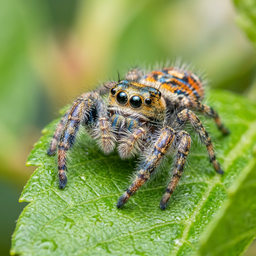
Jumping spiders (family Salticidae) are highly intelligent, visually oriented, and active diurnal spiders. Renowned for their incredible vision and charming curiosity, they are second only to tarantulas in popularity among pet arachnids, offering a delightful and manageable window into the world of pet bug keeping.
- Size0.5–1.0 inch
- Lifespan♂ ~1 yr / ♀ 2–3 yrs
- Temp70°F – 82°F
- HousingSolitary only
- LevelEasy
1. Natural History & Unique Physical Traits
- Natural Vision & Classification: Belonging to the family Salticidae, the largest family of spiders in the world. Their vision as a group is the best among all spider families.
- Diurnal Behavior: Diurnal hunters (active during the day). In nature and captivity, they retreat into protective silken hammocks when darkness falls.
- The Dragline Safety Net: They use silk as a dragline anchoring point before jumping. If they miss their target, the dragline catches them, allowing them to swing to safety or descend.
- Lifespan & Growth: Females live longer (typically 2 to 3 years in the genus *Phidippus*), while males typically live about a year. Jumping spiders never molt again after reaching maturity; any size increase after adulthood is purely from bulk feeding.
- Life Cycle Stages: The cycle starts with an egg, hatching into post-embryo stages. The final post-embryo stage is the "Eggs With Legs" (EWL) stage, where they are mobile but globular. They then molt into the first instar (called a spiderling), which is capable of hunting. Spiders then progress through juvenile and sub-adult stages.
2. Choosing the Perfect Enclosure
- Enclosure Sizing Rules: The size of your spider dictates the size of the enclosure it needs. Putting a small spiderling in a large tank makes it difficult for them to locate and capture prey.
• Spiderlings (Fruit Fly Feeders): Enclosures should be no larger than 3 inches in any direction.
• Juveniles & Adults: A container measuring 3 to 6 inches tall is ideal. Larger displays are fine for adults, provided they are properly decorated. - Top-Opening Enclosure Warning: Jumping spiders build their silken hammocks near the very top of their enclosures where the container base meets the lid. Standard top-opening lids can tear their hammocks, causing severe stress or interrupting a critical molt. Front-opening or bottom-opening enclosures are strongly recommended. If you must use a top-opening lid, open it with extreme care and know exactly where your spider is first. Encourage nesting away from the lid by placing tall branches or cork bark that stop just short of the top.
- Types of Enclosures:
• Deli Cups: Highly functional for raising young spiderlings, but uninspiring.
• Premium Acrylic/Glass Vivariums: Excellent for display, offering front or bottom access to preserve nests.
Solitary & Cannibalistic
Jumping spiders are strictly solitary and cannibalistic. Under no circumstances should two or more jumping spiders be housed in the same enclosure.
3. Heating, Ventilation, & Climate Control
- Room Temperature Baseline: Jumping spiders thrive at standard room temperature. While slightly warmer daytime temperatures (around 80°F / 27°C) encourage faster growth, supplemental heat mats or lamps can quickly overheat small enclosures and cause fatal dehydration. If you are comfortable in the room, your spider will be too.
- Cross-Ventilation: Proper ventilation is critical to prevent stagnant air and mold growth. Cross-ventilation (air holes on opposing sides of the enclosure) is best, allowing gentle airflow. Ensure ventilation holes are small enough that the spider cannot squeeze through.
- Humidity & Droplet Misting: Introduce humidity by lightly misting one side of the enclosure with a fine-mist spray bottle and occasionally moistening the substrate. The droplets should dry up within an hour or two. Heavy condensation or stagnant moisture leads to mold, bacteria, and potential drowning of young spiderlings.
4. Safe & Unsafe Bedding (Substrate)
- Safe Substrates: A combination of organic topsoil and clean sand is ideal. Other natural substrates like coconut fiber or peat moss are also safe. Substrate buffers humidity levels and masks droppings and food waste.
- Wild-Sourced Materials: You can use natural sticks and bark, but freeze them for a few days first to kill unwanted mites or pests. Note that wild materials mold more easily than sterilized commercial options.
- Unsafe Materials: Substrates containing chemical fertilizers, pesticides, or artificial scent additives.
5. Feeding, Vitamins, & Proper Hydration
- Feeder Guidelines by Life Stage: Feeder size must match the size of your spider. Feeding smaller prey more frequently is safer than risking large prey that can bite back.
| Life Stage | Instar Range | Recommended Feeder Type |
|---|---|---|
| Spiderling | 1st – 3rd Instar | Wingless *Drosophila melanogaster* Fruit Flies |
| Small Juvenile | 4th – 5th Instar | *D. melanogaster* or flightless *D. hydei* Fruit Flies |
| Large Juvenile / Sub-Adult | 6th Instar+ | *D. hydei*, house flies, or small mealworms |
| Adult | Mature | Small crickets, mealworms, blue bottle flies, small roaches |
- Feeding Location & Safety: If your spider struggles to find prey in a large display tank, you can feed it in a separate, small catch container. Never pull a spider out of its hammock to feed it; only move it if it is already out.
- Prey Removal Warning: Remove uneaten crickets or roaches within an hour. While fruit flies or house flies are harmless, crickets and roaches can attack and kill a molting or freshly shed spider.
- Hydration: Mist the enclosure walls daily with fine droplets. Jumping spiders drink directly from these droplets. Never leave standing water dishes, as spiders can easily drown in them.
6. Safe Handling & Deciphering Behavior
- Acclimation Period: Give new spiders a few days to acclimate to their enclosure and build their nests before handling.
- Diurnal Curiosity: Jumping spiders have a strong prey drive and exceptional vision. They will watch you and track your movements.
- Handling Technique: Let the spider be in control. Place your hand flat and let them crawl onto you. They will anchor themselves with a silk dragline before jumping. If they jump, it is usually less than 6–8 inches on flat surfaces.
- The Catch Cup Transfer: When transferring a spider, keep a clear catch cup nearby. If the spider moves too fast, cover it gently with the cup (being careful not to pinch it). Slide a piece of paper under the cup to safely transport them.
- No-Bite Nature: While capable of biting, jumping spiders are incredibly docile. Bites are almost unheard of in the hobby if the spider is not pinched or squeezed.
7. Health, Illness, & Troubleshooting
- The Molting Process: Molting is a delicate time. Spiders stop eating, become sluggish, and seal themselves inside a thickened silken hammock weeks or days in advance. Never disturb a spider in its molting hammock.
- Mismolt Prevention: Mismolts (failing to shed properly) are a major cause of early death. Prevent them by keeping the enclosure hydrated with daily fine misting. Hydration helps the spider slip out of its old skin.
- Teneral State: After molting, the spider is "teneral" (soft and unhardened). They must remain in their hammock for several days to dry. Do not offer food or handle them during this time, as their fangs and exoskeleton are soft and easily damaged.
- Sanitation: Remove uneaten food carcass remains promptly, as decaying insect bodies in humid conditions invite mold and bacteria.
8. Breeding Guidelines & Mating Process
- Maturity Identification: Ensure both spiders are mature. Mature males typically have bulkier front legs, swollen pedipalps (looking like boxing gloves), and smaller abdomens. Females are generally larger and bottom-heavy.
- Feeding Up: Feed both spiders heavily before introducing them. A hungry female is highly likely to attack and consume the male.
- The Courtship Dance: Place the spiders in a neutral space or introduce the male into the female's enclosure (at least 12" dimensions). The male will perform a visual courtship dance (waving legs and vibrating). Keep a catch cup ready in case the female lunges aggressively.
- Mating: After the dance, the male will crawl over the female, turn perpendicular, roll her slightly, and transfer sperm via his pedipalps. Once fertilized, separate them immediately.
9. Essential Supplies Checklist
Here is the complete checklist of supplies recommended by Chaos Creatures for setting up a healthy, naturalistic jumping spider habitat:
- Enclosure: Front-opening or bottom-opening acrylic/glass vivarium (approx. 4" x 4" x 6" to 6" x 6" x 8").
- Substrate: Organic topsoil and clean play sand mix (no fertilizers).
- Decor: Sterilized twigs, bark, and artificial/live foliage stopping just short of the ceiling.
- Misting: Fine-mist spray bottle (for daily drinking water droplets).
- Catch Cup: Transparent catch cup and card for safe transfer.
- Feeders: Drosophila melanogaster (for spiderlings) or D. hydei fruit flies (for juveniles).
- Feeding Tongs: Small, soft-tipped feeding tongs (for placing larger feeders).
- Supplemental LED: Standard low-heat LED light bar to mimic day/night cycles.
Setup Timeline
Keep in mind that everything should be purchased and set up BEFORE you get the spider. This ensures your new pet can acclimate and start nesting in a stable environment immediately.
IMPORTANT WELFARE NOTICE
This husbandry guide is designed to ensure the highest standards of invertebrate welfare. Providing proper cross-ventilation, daily fine-droplet hydration, and front-opening enclosures to preserve nests is essential. Chaos Creatures provides this baseline for educational purposes, and keepers assume full responsibility for the practical application of these standards.
A Note of Encouragement
Keeping jumping spiders is a wonderful way to overcome arachnophobia and connect with nature. These curious little creatures exhibit fascinating personalities and will quickly show you a different side of the spider world. Take your time, let them guide the pace of interaction, and enjoy your pet-keeping journey!
Important. These guides reflect the husbandry we use at Chaos Creatures and the published research we trust. They are not a substitute for a reptile veterinarian. If an animal is lethargic, refusing food for an extended period, has a wound or is breathing with its mouth open, see a vet.
Last reviewed Nov 6, 2026. Questions about this guide? Ask the rescue.