
Care library › Dubia Roach Colony
Feeder colony guide
Dubia Roach Colony
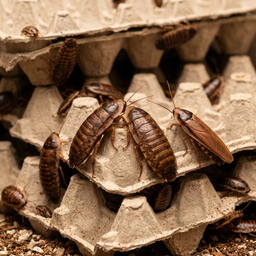
Blaptica dubia
Premier feeder insect — high protein (~22%), low chitin, good meat-to-shell ratio. Don't fly, can't climb smooth surfaces, don't chirp, minimal odor. Available in a wide range of sizes from nymph to adult.
- Temp85–95°F
- Humidity40–60%
- info~22% protein
Colony Setup
- Container: Dark (opaque) smooth-sided plastic bin, 20–40 gallons
- Hides: Egg crates stacked VERTICALLY — provides surface area and easy harvesting
- Ventilation: Cut holes in lid, cover with METAL screening (they chew through plastic mesh)
- NO substrate needed — bare bottom makes cleaning easier
Temperature & Humidity
- Temperature: 85–95°F for breeding. Below 70°F, reproduction stops almost completely.
- Humidity: 40–60%. Too wet = mold and mites. Water crystals provide hydration without excess moisture.
- Use heat mat/tape on thermostat. Mount on side of bin, never directly on carpet.
Diet & Gut-Loading
- Colony diet: Commercial roach chow or oats/grains. Fresh produce rotated: carrots, sweet potatoes, apples, squash, leafy greens.
- Gut-load (24–48 hrs before feeding to reptile): Calcium-rich foods — collard greens, mustard greens, butternut squash, carrots.
- Avoid: Spinach (blocks calcium), citrus, pesticide-treated produce
- Remove uneaten fresh food daily before mold develops
Breeding
- Ratio: 1 male : 3–5 females. Males have full wings; females have vestigial stubs.
- Ovoviviparous — live birth, ~20–40 nymphs per clutch, ~65-day gestation
- Colony takes 3–6 months to become self-sustaining. Patience required!
Maintenance
- Remove dead roaches and frass every 2–4 weeks
- Replace soiled egg crates as needed
- Full bin cleanout every 2–3 months
- Water crystals refreshed every 2–3 days
Pro Tip
Heat is EVERYTHING for Dubia breeding. A colony at 75°F barely reproduces. A colony at 90°F explodes with babies. The #1 reason people say "my colony isn't working" is insufficient heat. Also: wear gloves + N95 mask when cleaning — roach frass is a common allergen.
Important. These guides reflect the husbandry we use at Chaos Creatures and the published research we trust. They are not a substitute for a reptile veterinarian. If an animal is lethargic, refusing food for an extended period, has a wound or is breathing with its mouth open, see a vet.
Last reviewed Nov 6, 2026. Questions about this guide? Ask the rescue.