
Care library › Crested Gecko
Care guide
Crested Gecko
Correlophus ciliatus
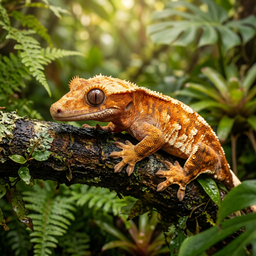
Arboreal, nocturnal/crepuscular gecko endemic to the tropical rainforests of New Caledonia. Once believed extinct until its rediscovery in 1994, the crested gecko is now one of the most popular reptiles in the world, prized for its docile nature and relatively straightforward room-temperature care.
- Size6–10 inches
- Lifespan15–20+ years
- Weight35–60g
- HousingSolitary preferred
- LevelEasy
1. Natural History & Unique Physical Traits
- Habitat & Rediscovery: Native to the island nation of New Caledonia. Extinct in the wild until rediscovered during an expedition in 1994. They live primarily in canopy vegetation and thin branches.
- Escape Behavior: They hide among thin, high twigs during the day to avoid heavy predators like Leach's giant geckos (*Rhacodactylus leachianus*), exposing themselves to dappled sunlight.
- Vocalization: Communicate using a cute squeak or chirp that sounds like a rubber duck. This can signify breeding intent, territorial warnings, or startle defense.
- Tail Loss (Autotomy): Under stress, they drop their tail. Unlike other geckos, **crested gecko tails do not regenerate**. Tailless cresties are affectionately known as "frog butts" and live completely normal lives.
- No Eyelids: Lacking eyelids, they close their eyes to sleep by retracting the eyeball slightly, and they lick their eyes to clean and hydrate them.
2. Choosing the Perfect Enclosure
- Enclosure Size Guidelines: Height is much more important than width or depth since they are arboreal, but horizontal space is also vital to facilitate leaping:
• Hatchlings (<12g): 12″L x 12″W x 12″H minimum.
• Juveniles & Adults (>12g): 18″L x 18″W x 36″H (approx. 50 Gallons) is the recommended minimum. Larger is always better! - Recommended Enclosures:
• Hatchlings: Zoo Med Naturalistic Terrarium (12"x12"x12").
• Adults: Zen Habitats 2’x2’x2′ (minimum), Toad Ranch BC24 2’x2’x2′ (minimum), Toad Ranch TRC 2’x2’x30″, Zoo Med Skyscraper (18"x18"x36"), Repti Zoo (24"x18"x36"), Toad Ranch CN36 (3’x2’x3′), or Zen Habitats 2’x2’x4′. - The Cohabitation Risk:
• Multiple Males: Never house males together; they will fight, injure, or kill one another.
• Male & Female: Will breed constantly. Only cohab temporary for breeding, never long-term.
• Multiple Females: Can work but is not optimal. Requires a giant enclosure at least 2x the volume of an 18"x18"x36" (minimum 23,000 cubic inches). Minimize competition by providing multiple food/water dishes, separate basking spots, and dense cover. Separate immediately if tail nipping, crest biting, or weight loss occurs.
3. Heating, Lighting, & Climate Control
- Photoperiod: Provide a clear circadian cycle of 14 hours of light during summer and 10 hours during winter. Avoid black, blue, or red bulbs at night (geckos see this light, disrupting their cycle).
- UVB Provision: While not strictly necessary for survival, UVB increases overall health and allows geckos to see UVA light (an extra color). Since they hide under foliage, they are Ferguson Zone 1. Basking branch target UVI should be 1.0–2.0:
• Arcadia T5 SO ShadeDweller 7%: 8″ – 12″ (20–30cm) above mesh.
• Arcadia T5 SO ShadeDweller Max 2.5%: 6″ – 9″ (15–23cm) above mesh.
• Assumes a 35% mesh block. Naked bulbs only (remove plastic covers). - Temperature Gradients:
• Basking Area (Top): 82°F – 85°F (28°C – 29°C)
• Cool Area (Bottom): 70°F – 75°F (21°C – 24°C)
• Nighttime Drop: 65°F – 72°F (18°C – 22°C)
• CRITICAL: Temperatures above 85°F can cause lethal heat stroke. Access to a mild heat source is required for proper digestion. - Heating Methods: Use a low-wattage incandescent or halogen bulb. In a 12″ hood (Zoo Med Paludarium Hood), use a 25w Exo Terra Daytime Heat Lamp. In a 5.5″ dome, use a 50w Exo Terra Intense Basking Spot. Measure with a temp gun (Etekcity 774) and digital probe thermometer.
- Hatchling Grow-out Settings (<13g):
• Lighting: High-output UVB on top of tiny cages can cook them. Use a Zoo Med 13w Reptisun 5.0 Compact Coil bulb in a dome fixture hung on a lamp stand.
• Heating: Place a small heat mat (Exo Terra 4"x7") on one side connected to a thermostat set to a maximum of 85°F (29°C). Turn off at night. - Humidity & Misting: Maintain humidity between 60% – 80% with daily misting. **Let the enclosure dry out to 40% – 50% before misting again**; constant moisture causes respiratory infections and mold. Mist heavily in the evening using a pressure sprayer (Exo Terra 2L). Clean hard water marks on glass using a lemon-juice soaked cotton ball.
4. Safe & Unsafe Bedding (Substrate)
- Natural Substrates: Best for retaining moisture and humidity (loose substrates present an impaction risk for geckos under 13g):
• DIY Tropical Mix: 60% organic topsoil and 40% coconut fiber (layer 2-4″ thick).
• Coconut Fiber: Zoo Med Eco Earth or Exo Terra Plantation Soil.
• Commercial Mixes: Lugarti Natural Bedding, Zoo Med Reptisoil, Pangea ABG Mix, Bio Dude Terra Fauna, or Josh's Frogs Tropical BioBedding.
• Bioactive Setups: Bioactive soil paired with detritivores (isopods, springtails) breaks down waste for a self-cleaning system. - Artificial Substrates: Paper towels or blue shop towels are cheap, easy to replace, and optimal for quarantine and hatchlings. Replace weekly.
- Substrates to Avoid:
• Wood chips/bark (severe impaction risk).
• Pine/cedar shavings (toxic oils cause neurological damage).
• Reptile carpet (fibers trap bacteria and rip out toes/claws).
• Shelf liner or linoleum (off-gasses toxic chemicals).
5. Feeding, Diet, & Proper Hydration
- Prepared Gecko Diets (CGD): Complete prepared diets are the standard. Use high-quality formulas: **Pangea**, **Arcadia**, **Repashy**, **BPZ**, **Leapin' Leachie**, **Zoo Med** (new formula), **Lugarti**, or **Blue River Diets**.
• Rotate at least 3 flavors/brands for complete nutrition and sensory enrichment.
• **NEVER** use baby food as a diet substitute (causes severe malnutrition).
• Mix CGD to a ketchup consistency. Serve in a biodegradable cup on a wall-mounted magnetic ledge. - Feeding Schedule:
• Juveniles (0-12 months): CGD daily, insects 1-2x/week.
• Adults (>12 months): CGD every 2-3 days, insects 0-1x/week. - Fresh Fruits: Offer fresh fig, mango, apricot, papaya, or berry smoothies as a rare treat. Over-offering causes them to reject complete CGD.
- Insects: Feeder insects provide essential exercise, protein, and enrichment. Staple feeders: crickets, dubia/discoid roaches, small hornworms (captive-bred only), black soldier fly larvae, and silkworms. Waxworms are treats. **Avoid mealworms and superworms** (difficult to digest, impaction risk).
• Feeder insects must be no wider than the space between the gecko's eyes.
• Dust all insects with calcium (with D3 if no UVB, without D3 if UVB is used) using Zoo Med Repti Calcium, Repashy SuperCal, or Miner-All.
• Gut-load insects for 2-3 days prior to feeding using Repashy Superload, Mazuri Better Bug, or Arcadia InsectFuel. - Hydration: Misting provides water droplets to lick off plants/walls. Also provide a cup of fresh hard tap water on their feeding ledge (avoid distilled/RO water).
6. Safe Handling & Temperament
- Acclimation: Wait 2 weeks after bringing a new gecko home before handling.
- Handling Space: Handle over a soft surface (bed or couch). Crested geckos are programmed to do "leaps of faith" and expect a branch; a soft surface prevents fall injuries.
- Session Length: Start with 5 minutes every other day. Gradually increase to 15 minutes, with a maximum of 20 minutes daily.
- Handling Flighty Geckos:
• Treadmilling: Place one hand in a cup shape 4-6 inches in front of the gecko as it steps forward, switching hands continuously.
• Day Handling: Handle them gently during the day when they are sleepy and move slower. - Biting: Crested geckos rarely bite. If they do, it feels like a quick pinch and rarely draws blood.
7. Health, Illness, & Troubleshooting
- Dehydration: Sunken eyes, protruding hips/ribs, wrinkled skin, wavy tail. Increase misting, add more water to CGD, and consult an exotic vet.
- Impaction: Weight loss, loss of appetite, absence of stool. Caused by loose substrate, oversized insects, or dehydration. Increase misting, feed soft-bodied insects, and call a vet.
- Metabolic Bone Disease (MBD): Wavy tail, soft jaw, curved limbs, lethargy, loss of appetite. Caused by calcium/D3 deficiency. Install UVB, dust insects, and check their mouth's calcium sacs (calcium reserves). Seek veterinary care.
- Obesity: Fat rolls, pudgy appearance. Caused by too many insects, fatty worms, or a small enclosure. Reduce insects and CGD frequency; house in a larger, climbable enclosure.
- Stuck Shed: Check toes and tail tip to prevent blood flow restriction. Create a "shedding sauna" with a ventilated Tupperware container lined with wet, lukewarm paper towels for 10-15 minutes.
- Weight Loss: Can indicate parasites, stress from cohabitation, or poor diet. Separate geckos and consult a vet. Weigh weekly using a kitchen scale.
8. How to Determine the Sex of Your Gecko
- Adult Sexing: Males develop a very prominent hemipenal bulge at the base of the tail once they reach 18–25g. Females lack this bulge.
- Pore Examination: Experienced keepers/breeders check for pre-anal pores using a jeweler's loupe or magnifying glass on smaller juveniles, though this is not 100% reliable until the bulge develops.
9. Essential Supplies Checklist
To ensure the highest standard of welfare, here is the complete checklist of supplies recommended by Chaos Creatures based on your gecko's weight:
- For Juveniles (<20g):
• Enclosure: 12″L x 12″W x 12″H front-opening enclosure.
• Heating: 25w Exo Terra Daytime Heat Lamp.
• Lighting & UVB: Zoo Med Reptisun 5.0 Mini CFL UVB (13w).
• Fixture: 12″ Zoo Med Paludarium Hood (x2).
• Substrate: Paper towels (or 5+ quarts Eco Earth coco fiber). - For Subadults & Adults (>20g):
• Enclosure: 18″L x 18″W x 36″H front-opening enclosure (larger preferred).
• Heating: 60w Exo Terra Daytime Heat Lamp.
• Lighting & UVB: 12″ Arcadia T5 SO ShadeDweller 7% UVB Kit.
• Fixture: 5.5″ Zoo Med Mini Deep Dome lamp fixture.
• Substrate: DIY tropical mix or Eco Earth (12+ quarts). - Core Equipment (All Sizes):
• Zilla 24/7 Digital Power Center / Timer.
• Exo Terra Mister (Pressure Sprayer).
• Zoo Med Combo Digital Thermometer / Humidity Gauge.
• Pangea Magnetic Feeding Ledge & Biodegradable cups.
• Prepared Diet: Pangea, Repashy, or Arcadia (3+ flavors for rotation).
• Supplements: Miner-All Outdoor calcium powder.
• Disinfectant: Rescue RTU veterinary disinfectant and a dedicated spray bottle.
• Health: Digital kitchen scale (for weekly weight checks).
Setup Timeline
Keep in mind that everything should be purchased and set up BEFORE you get the gecko. This will save you a lot of stress, and does your new pet a big favor, too.
IMPORTANT WELFARE NOTICE
This husbandry guide is designed to be followed as a comprehensive system. The environmental parameters, diet, and heating methods recommended by Chaos Creatures are carefully integrated to ensure the highest standards of animal welfare. Selecting only certain components while ignoring others (such as skipping thermostat controls or proper humidity gradients) can lead to serious health complications, chronic stress, or even fatal consequences for your reptile. Chaos Creatures provides this baseline for educational purposes, and keepers assume full responsibility for the practical application of these standards.
A Note of Encouragement
We understand that this guide is highly detailed and may feel overwhelming at first. Don't feel discouraged! Developing the experience to master reptile husbandry is a journey that takes years of hands-on learning. There is a lot of outdated advice in the hobby, and learning modern science-backed keeping is a gradual process. Our goal at Chaos Creatures is to support, guide, and empower you as a keeper, helping you build a thriving habitat for your animal step by step.
Important. These guides reflect the husbandry we use at Chaos Creatures and the published research we trust. They are not a substitute for a reptile veterinarian. If an animal is lethargic, refusing food for an extended period, has a wound or is breathing with its mouth open, see a vet.
Last reviewed Nov 6, 2026. Questions about this guide? Ask the rescue.