
Care library
Husbandry guides written from our own rack room
Care sheets written from our own husbandry, not copied from a pet-store leaflet. Every guide is reviewed as our practice changes.

Species
Who these guides are for
Care guides
Full care sheets
Each sheet covers natural history, enclosure, heat and light, humidity, diet, handling, health and breeding ethics. Print any of them for free.
01 · Care guide
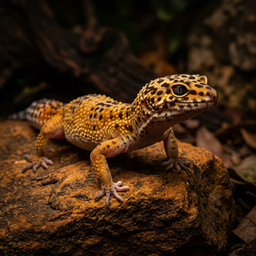
Leopard Gecko
Eublepharis macularius
Crepuscular, terrestrial gecko native to the arid regions of South Asia (Afghanistan, Pakistan, India). Hardy and docile — one of the best beginner reptiles whe…
- Size7–10 inches
- Lifespan15–20+ years
- Weight50–80g
- HousingSolitary only
02 · Care guide
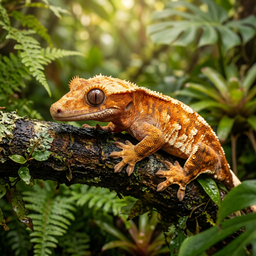
Crested Gecko
Correlophus ciliatus
Arboreal, nocturnal/crepuscular gecko endemic to the tropical rainforests of New Caledonia. Once believed extinct until its rediscovery in 1994, the crested gec…
- Size6–10 inches
- Lifespan15–20+ years
- Weight35–60g
- HousingSolitary preferred
03 · Care guide
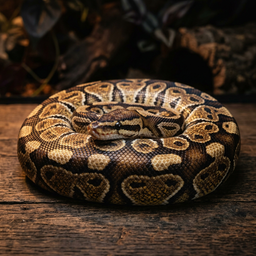
Ball Python
Python regius
Ball pythons (also known as royal pythons) are a terrestrial species of constricting snake native to regions of western and central Africa. In the wild, they ar…
- Size♂ 3.6–4.3 ft / ♀ 3.8–4.5 ft
- Lifespan15–30+ years
- Weight1,000–2,500g
- HousingSolitary only
04 · Care guide
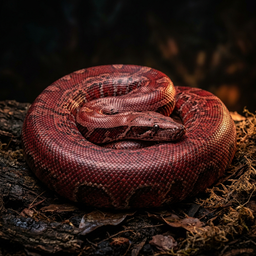
Blood Python
Python brongersmai
Heavy-bodied python from Southeast Asia's tropical lowlands — marshes, swamps, and forest floors. One of the heaviest pythons relative to length (15–30+ lbs). H…
- Size4–6 ft
- Lifespan20–25+ years
- Weight15–30+ lbs
- HousingSolitary only
05 · Care guide
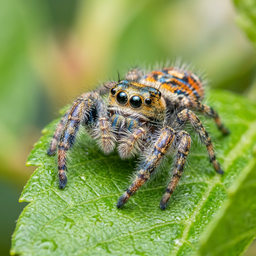
Jumping Spider
Phidippus spp.
Jumping spiders (family Salticidae) are highly intelligent, visually oriented, and active diurnal spiders. Renowned for their incredible vision and charming cur…
- Size0.5–1.0 inch
- Lifespan♂ ~1 yr / ♀ 2–3 yrs
- Temp70°F – 82°F
- HousingSolitary only
Feeder colonies
Raising your own feeders
How we keep dubia, crickets and rats so the animals eat well and the bills stay sane.
01 · Feeder colony
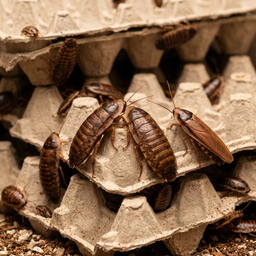
Dubia Roach Colony
Blaptica dubia
Premier feeder insect — high protein (~22%), low chitin, good meat-to-shell ratio. Don't fly, can't climb smooth surfaces, don't chirp, minimal odor. Available …
- Temp85–95°F
- Humidity40–60%
- info~22% protein
02 · Feeder colony
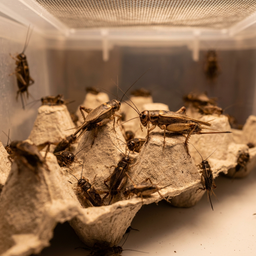
Cricket Colony
Acheta domesticus
Classic feeder insect — high protein (~20%), active movement triggers feeding response. Higher chitin than dubias. Must be dusted with calcium and gut-loaded. N…
- Temp75–85°F
- Humidity50–60%
- info~20% protein
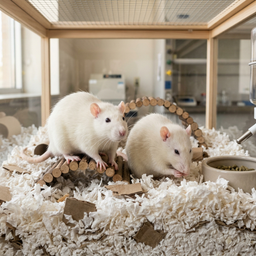
03 · Feeder colony
Feeder Rat Colony
Rattus norvegicus
Complete whole-prey nutrition — protein (~58% dry), fat (~28% dry), calcium from bones. No supplementation needed for snakes fed whole prey. Available sizes fro…
- Temp65–79°F
- Humidity40–70%
- info~58% protein