
Care library › Blood Python
Care guide
Blood Python
Python brongersmai
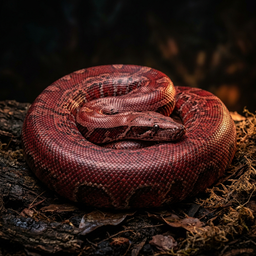
Heavy-bodied python from Southeast Asia's tropical lowlands — marshes, swamps, and forest floors. One of the heaviest pythons relative to length (15–30+ lbs). Historically misunderstood as "aggressive" — captive-bred animals are often calm and docile.
- Size4–6 ft
- Lifespan20–25+ years
- Weight15–30+ lbs
- HousingSolitary only
Enclosure & Environment
- Adults: 48"×24"×24" minimum. PVC or wooden vivariums strongly recommended.
- Juveniles: Can start in smaller tubs (helps them feel secure)
- Substrate: Cypress mulch (top choice), large coconut husk chips. Avoid small coco chips (can cause stomatitis), pine/cedar.
- Hides: Multiple secure, opaque, snug-fitting hides. Opaque enclosure walls reduce stress.
- Water: Large, heavy, tip-resistant bowl big enough to soak in
Temperature
- Basking spot: 84–88°F
- Warm side: 82–88°F
- Cool side: 76–80°F
- Night drop: To 72–75°F
- Heating: Overhead radiant heat on thermostat. Deep heat projectors or CHE work well in PVC.
Critical Warning
Blood pythons are EXTREMELY sensitive to overheating. Temperatures above 90°F cause rapid dehydration, food refusal, defensive behavior, and potentially death. Always use a thermostat. When in doubt, cooler is safer.
Humidity
- Range: 60–75%
- Shedding: Bump to 75–80%
- Good ventilation is CRITICAL — stale, wet conditions cause RIs and scale rot
Lighting
- UVB: Recommended — low-strength (Arcadia Forest 6% or Zoo Med 5.0). Ample retreat areas required.
- Photoperiod: 12 hours light / 12 hours dark
Diet & Feeding
- Food: Appropriately sized rats (adults), mice (babies/juveniles)
- Frozen-thawed strongly recommended
- Juveniles: Every 7–10 days
- Sub-adults: Every 10–14 days
- Adults: Every 14–28 days (sedentary species — easily become obese!)
- Size: Width of thickest part of body
- Supplements: NOT required
Obesity Warning
Blood pythons are sedentary ambush predators. Overfeeding is one of the most common keeper mistakes. Feed conservatively and monitor body condition regularly.
Handling & Temperament
- The "aggressive" reputation is largely outdated for captive-bred animals
- Use hook/tap training — gently touch before picking up to distinguish from feeding
- Be CONFIDENT — deliberate, smooth movements. Hesitation causes defensive strikes.
- Support their ENTIRE heavy body — never dangle
- A nervous blood python is usually telling you something is wrong with husbandry
- Stress signs: Huffing/hissing, S-posture, tail vibrating, musking
Health Concerns
- Respiratory infections: VERY prone. From cold, stale, or overly wet conditions.
- Obesity: Sedentary + overfeeding. Monitor body condition closely.
- IBD: Fatal viral disease. Strict quarantine essential.
- Mouth rot (Stomatitis): From poor hygiene, stress, improper temps.
- Scale rot: From sitting in wet, dirty substrate.
- Red flags: Wheezing, stargazing, discolored scales, chronic food refusal.
Pro Tip
Keep it cool and simple. Most new keepers apply "standard python" temps (90°F+ basking), which makes bloods defensive, dehydrated, and sick. They thrive at temperatures that feel "cool" for pythons. A nervous blood python usually means the husbandry needs fixing, not that the animal is inherently aggressive.
Important. These guides reflect the husbandry we use at Chaos Creatures and the published research we trust. They are not a substitute for a reptile veterinarian. If an animal is lethargic, refusing food for an extended period, has a wound or is breathing with its mouth open, see a vet.
Last reviewed Nov 6, 2026. Questions about this guide? Ask the rescue.