
Care library › Cricket Colony
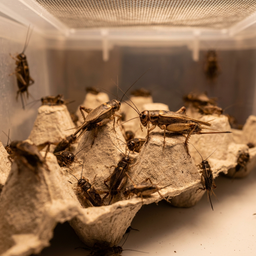
Feeder colony guide
Cricket Colony
Acheta domesticus
Classic feeder insect — high protein (~20%), active movement triggers feeding response. Higher chitin than dubias. Must be dusted with calcium and gut-loaded. Note: consider Gryllodes sigillatus (Banded Cricket) as a virus-resistant alternative.
- Temp75–85°F
- Humidity50–60%
- info~20% protein
Colony Setup
- Container: Large plastic bin or glass tank (10–20 gal minimum) with secure, ventilated lid. Crickets are expert jumpers!
- Bottom: Keep DRY — bare or paper towels. Egg crates stacked vertically for surface area.
- Egg laying: Separate shallow dish with damp coconut fiber or vermiculite
- Ventilation: Critical — cut holes, cover with fine metal mesh
Temperature & Humidity
- Temperature: 75–85°F for growth and breeding
- Humidity: Keep LOW — 50–60%. Excess moisture = odor, mold, disease, die-offs.
- Provide moisture through food items, NOT spraying
Diet & Gut-Loading
- Colony diet: Commercial cricket food, fresh vegetables, oats/grains
- Gut-load (6–24 hrs before feeding): Collard greens, mustard greens, kale, carrots, squash. Commercial: Mazuri Better Bug, Repashy Bug Burger.
- Hydration: Moisture-rich veggies or damp sponge. AVOID standing water — crickets drown easily.
Breeding
- Females (identified by ovipositor) lay eggs into moist substrate
- Swap egg containers every 2–3 days, incubate at 75–85°F
- Eggs hatch in 7–14 days
- CRITICAL: Separate by size — larger crickets WILL eat smaller ones (cannibalistic)
Maintenance
- Remove dead crickets DAILY (prevents disease and odor)
- Remove uneaten fresh food daily
- Full clean at least weekly
- Full sanitization after any die-off (diluted bleach, rinse thoroughly)
Virus Warning
Acheta domesticus Densovirus (AdDV) has devastated cricket colonies worldwide. If you experience unexplained mass die-offs, consider switching to Banded Crickets (Gryllodes sigillatus), which are resistant to AdDV — or start a Dubia colony instead.
Important. These guides reflect the husbandry we use at Chaos Creatures and the published research we trust. They are not a substitute for a reptile veterinarian. If an animal is lethargic, refusing food for an extended period, has a wound or is breathing with its mouth open, see a vet.
Last reviewed Nov 6, 2026. Questions about this guide? Ask the rescue.