
Care library › Companion Parrots: Cockatiels, Budgies, Conures & Lovebirds
Care guide
Companion Parrots: Cockatiels, Budgies, Conures & Lovebirds
Nymphicus, Melopsittacus, Aratinga, Pyrrhura & Agapornis
The small and medium parrots that end up in most homes, and most often at the rescue: cockatiels, budgerigars, green-cheek and sun conures, and lovebirds. They differ in noise and personality, but the rules that keep them healthy are the same. If you have a parrot that is not covered by one of our species guides, start here.
- Size7–13 inches
- Lifespan7–30 years by species
- HousingFlock birds, need daily company
- LevelBeginner to intermediate
1. Choosing a Species
- Budgerigar (budgie): 7 in, 7–15 years, quiet chatter, happiest in pairs or small groups. The best first parrot, and chronically under-housed in tiny round cages.
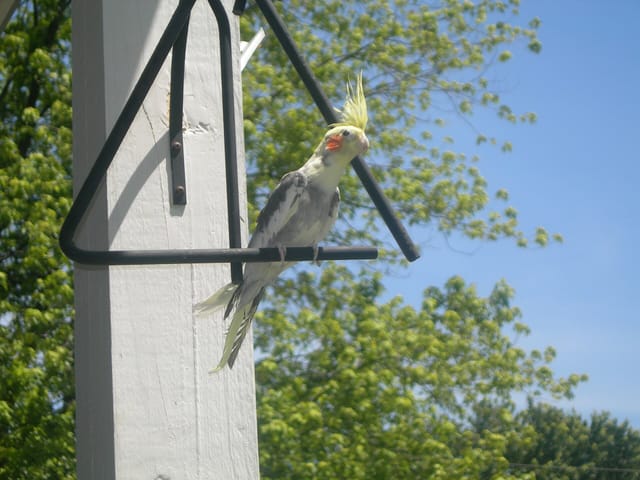
- Cockatiel: 12 in, 15–25 years, gentle, whistlers rather than screamers, prone to night frights. The easiest medium parrot for a family.
- Green-cheek conure: 10 in, 20–30 years, playful, cuddly, nippy as adolescents, moderate noise. Sun, jenday and nanday conures are the same bird with a scream that carries across a parking lot.
- Lovebird: 6 in, 10–15 years, fearless, busy, bossy. Despite the name they do not need a mate, and a bonded pair often turns on the humans.
- Adopt: Every one of these is available from rescues and rehoming groups as an adult whose personality you can meet first.
2. Housing
- Cage size, bar spacing: Budgie 18 × 18 × 24 in minimum, 1/2 in bars. Cockatiel 24 × 24 × 30 in, 1/2–5/8 in. Conure 24 × 24 × 30 in, 5/8–3/4 in. Lovebird 24 × 18 × 24 in, 1/2 in. Bigger is always better, and width beats height. Round cages are not suitable for any of them.
- Inside the cage: Natural branch perches of varying diameter (no dowels or sandpaper covers), a rope perch, two or three toys rotated weekly, and bowls placed so droppings cannot fall in them.
- Placement: Against a wall in the family room, out of the kitchen, out of drafts and direct sun. Cover at night for 10–12 hours of dark, quiet sleep. Cockatiels benefit from a dim night light to prevent night frights.
3. Diet
- The seed problem: An all-seed diet is the single biggest killer of pet birds. It is high-fat, low in vitamin A and calcium, and leads to fatty liver disease, egg binding in hens and a shortened life. Birds fed seed from a pet shop will fight the change; make it anyway.
- Converting to pellets: Offer pellets in the morning and seed only for a short window in the evening, shrinking the window over two to four weeks. Weigh the bird through the transition and never let it go a full day without eating. Budgies are the stubborn ones.
- Target diet: 60–70% pellets sized for the bird, 20–30% fresh vegetables and leafy greens daily, a little fruit, seed and millet as treats and training rewards.
- Never: Avocado, chocolate, caffeine, alcohol, onion, garlic, xylitol, fruit pits and apple seeds.
- Water: Changed daily, twice if the bird dunks food.
4. Household Hazards
- PTFE (Teflon): Overheated non-stick pans, self-cleaning ovens, some air fryers, hair dryers and space heaters release a fume that kills small birds in minutes. Remove non-stick cookware from a bird home entirely.
- Air: Scented candles, plug-ins, aerosols, incense, smoke and vape, fresh paint, bleach and oven cleaner.
- Physical: Ceiling fans, open toilets and pots of water, hot stoves, windows and mirrors, open doors, dogs and cats (a scratch is an emergency), and toys with frayed rope or small gaps.
5. Company, Enrichment & Behaviour
- They are flock animals. A single bird needs a few hours a day with people. Budgies and lovebirds do well in pairs if you cannot provide that, with the trade-off that paired birds are less tame.
- Out-of-cage time: Daily, in a bird-proofed room, on a playstand or with you.
- Foraging and chewing: Wrap pellets in paper, use foraging cups, offer shreddable toys, millet sprays and safe branches. A bored parrot screams, plucks or chews the furniture.
- Training: Step-up and target training with millet, five minutes a day. It makes vet visits, nail trims and moving the bird painless.
- Hormones: Long daylight, warm mushy food, nest boxes and petting down the back trigger breeding behaviour: regurgitating, biting, and in hens, egg laying. Keep daylight at 10–12 hours, remove nesting sites, and touch only the head and neck.
- Egg laying: A hen that keeps laying without a mate can deplete calcium and become egg-bound (straining, fluffed, on the cage floor). This is an emergency. Leave laid eggs in place for three weeks so she stops, and see a vet about hormone options if it continues.
6. Health & Quarantine
- Avian vet: Find one before you need one. New birds get a check-up and a yearly exam after that.
- Quarantine: Every new bird spends 30–45 days in a separate room with separate bowls and tools, and you handle the established birds first each day. Psittacosis, polyomavirus and PBFD spread between birds that look healthy.
- Signs of illness: Fluffed and quiet, sitting on the floor, tail bobbing with each breath, sneezing or nostril discharge, change in droppings (watery, green, black, or more urine), weight loss, a hen straining. Small birds hide illness until they are very sick; call the same day.
- Zoonosis: Psittacosis can infect people, with flu-like symptoms. Tell your doctor you keep birds. Wash hands, do not kiss beaks, and keep bird rooms ventilated.
- Weigh weekly on a gram scale. It is the only early warning you get.
7. Grooming
- Nails: Rough perches keep them in check; a vet or experienced groomer trims the rest. Keep styptic powder on hand if you trim at home.
- Wings: Flighted birds are healthier and more confident, but the house must be bird-proofed and the bird recall-trained. If you clip, clip lightly and symmetrically, so the bird glides down instead of dropping.
- Beak: Never trimmed at home. An overgrown beak is a liver or nutrition problem for the vet.
- Bathing: Misting or a shallow dish several times a week. Cockatiels in particular produce dust and need it.
8. Essential Supplies Checklist
- Cage sized and barred for the species, placed in the family room
- Natural perches of several diameters and a rope perch
- Pellets sized for the bird, fresh chop, millet for training
- Three or four toys in rotation, foraging cups, a playstand
- Gram scale, cage cover, travel carrier, styptic powder
- An avian vet's number, and a quarantine plan before the next bird
Header photo: public domain, via Wikimedia Commons.
Health questions? The Parrots section of our health FAQ covers the problems we are asked about most. It is general hobby knowledge, not veterinary advice.
Important. These guides reflect the husbandry we use at Chaos Creatures and the published research we trust. They are not a substitute for a reptile veterinarian. If an animal is lethargic, refusing food for an extended period, has a wound or is breathing with its mouth open, see a vet.
Last reviewed Nov 11, 2026. Questions about this guide? Ask the rescue. Something wrong with the animal? Find an exotic vet near you.