
Care library › Colubrids: Corn, King, Milk & Rat Snakes
Care guide
Colubrids: Corn, King, Milk & Rat Snakes
Pantherophis, Lampropeltis & allies
Colubrids are the big family of slender, fast, non-venomous snakes that includes corn snakes, kingsnakes, milk snakes and rat snakes. They are the easiest snakes to keep well: modest size, forgiving temperatures, cheap to feed and usually calm once grown. Most of this guide applies to all of them; the species notes at the end cover the differences.
- Size3–6 ft depending on species
- Lifespan15–25+ years
- Temp85–88°F warm · 72–78°F cool
- Humidity40–60%
- HousingSolitary only
- LevelBeginner
1. Who They Are
- Corn snakes (Pantherophis guttatus): the classic first snake. 3–5 ft, docile, hardy, available in hundreds of colour morphs.
- Kingsnakes (Lampropeltis: California, Florida, Mexican black and others): stocky, food-driven and famous for eating other snakes, including each other. Always housed alone.
- Milk snakes (Lampropeltis triangulum and relatives): banded red, black and yellow look-alikes of coral snakes. Shy and quick as babies, settle with age. Pueblan, Honduran and Nelson's are the common pets.
- Rat snakes (black rat, Texas rat, Everglades, and Asian species such as the beauty snakes): longer, more arboreal and more active. Some of the Asian species want more room and height than this guide's minimums.
- Garter snakes: also colubrids, but semi-aquatic with a fish-and-worm diet. Fun, but a different setup; ask us before buying one on this guide.
2. Enclosure
- Hatchlings: A 6–15 quart tub or 10-gallon tank with a tight lid. Babies hide and feed better in a small space with lots of cover.
- Adults: A 40-gallon breeder (36 × 18 in) is the floor for a corn, king or milk snake; 4 × 2 × 1 ft is better, and 4 × 2 × 2 ft lets the climbers climb. Big rat snakes need the 4-foot enclosure as a minimum.
- Escape-proof is the whole game: Colubrids are the escape artists of the hobby. A snake can fit through any gap its head fits through. Locking lids, clips on tubs, and no gaps around cable entries. Most "lost" snakes went out a screen lid that was not latched.
- Furniture: At least two hides (one each end), a water bowl big enough to soak in, branches or cork rounds, and clutter: fake plants, leaf litter, cork flats. A snake that can hide everywhere is a snake you will actually see.
- Substrate: Aspen is the standard for corns and kings (holds a burrow, cheap, do not let it get wet). Cypress mulch or a coco-fibre mix for species that like a little humidity. Never cedar or pine shavings.
3. Heat, Light & Humidity
- Warm side: 85–88°F at the surface of the warm hide, from an under-tank heater or an overhead source, always on a thermostat. An unregulated heat mat can reach 120°F and burn a snake lying on it.
- Cool side: 72–78°F. Night drops into the high 60s are fine for all the North American species.
- Light: Room light on a day/night rhythm is enough. Low-level UVB (a 5–7% T5 tube) is a nice addition and seems to improve activity and appetite, but it is not required the way it is for a bearded dragon.
- Humidity: 40–60% for most. Add a humid hide (a box of damp sphagnum moss) when the eyes go cloudy before a shed. Asian rat snakes and some milk snakes prefer the upper end.
4. Feeding
- What: Frozen-thawed mice, moving up to small rats for the larger rat snakes and kings. Prey should be about 1–1.5 times the width of the snake at its thickest point. Thaw in a bag in warm water, never the microwave, and offer with tongs.
- How often: Hatchlings every 5–7 days, yearlings every 7–10 days, adults every 10–14 days. Kingsnakes will act starving every day; do not believe them, obese kings are common.
- Live prey: Avoid. A mouse left in with a snake that is not hungry can chew the snake badly. If a hatchling refuses frozen-thawed, try braining the thaw, scenting with chick down or a different prey species, or leaving it overnight in a small deli cup inside a dark tub.
- Refusals: Common around sheds, in winter, and in males during breeding season. A snake holding weight and acting normally can skip a month without concern. Weigh monthly so you know.
- After feeding: Leave them alone for 48 hours. Handling a full snake is how you get a regurgitation, and a regurgitation means two weeks off food and smaller meals when you restart.
5. Handling & Temperament
- Hatchlings are defensive: they rattle their tails, strike and musk. It is bluff. Short daily sessions of a few minutes, lifting from below and letting them move hand to hand, turn almost all of them into calm adults within a few months.
- Musk: A foul-smelling fluid from the vent. Harmless, washes off, and stops once the snake trusts you.
- Kings and milks can be bitey when they smell food on your hands. Wash before handling and use a hook or paper towel tube to lift them out of the enclosure so they learn hands mean handling, not food.
6. Health
- Mites: Tiny black dots around the eyes and under the chin, a snake soaking constantly, specks in the water bowl. Treat the snake and the whole enclosure; they come in on new animals and substrate.
- Respiratory infection: Wheezing, bubbles at the nostrils, open-mouth breathing, holding the head up. Usually cold and damp conditions. Raise temperatures, dry the enclosure, see a vet for antibiotics.
- Scale rot: Red or brown blistered belly scales from wet substrate. Dry, clean, paper towel, vet if it spreads.
- Stuck shed: A healthy shed comes off in one piece, eye caps included. Retained eye caps or tail tips mean humidity was too low; a warm soak and a damp towel to crawl through fix most of it. Never pull at eye caps.
- Brumation: Optional for pets. Adults can be kept at normal temperatures year-round. If you brumate for breeding, do it properly: empty gut, gradual cool-down to 50–55°F, water always available.
7. Species Notes
- Corn snake: The template this guide is written around. Few quirks. Excellent climbers; give them a branch.
- California kingsnake: Hardy, food-obsessed, will try to eat cage mates, feeding tongs and fingers. Solitary, no exceptions. Slightly lower humidity than corns.
- Milk snakes: Nervous as babies and prone to musking; flighty rather than aggressive. Pueblans stay small (3 ft), Hondurans reach 4–5 ft and want slightly warmer, more humid conditions.
- Black and Texas rat snakes: Bigger, stronger, more active, with a reputation for attitude that mostly fades with handling. Height and branches matter.
- Asian beauty snakes and similar: Long, arboreal, fast. 4 × 2 × 2 ft minimum with height used, humidity 60–70%, and an owner ready for a snake that moves.
8. Essential Supplies Checklist
- Escape-proof enclosure sized for the adult (40-gallon breeder minimum, 4 × 2 × 1 ft better)
- Heat source on a thermostat, plus a temp gun to check surface temperatures
- Two hides, a humid hide for sheds, a soaking-sized water bowl, branches and clutter
- Aspen or mulch substrate, never cedar or pine
- Frozen prey, feeding tongs, a kitchen scale for monthly weights
- A snake hook and a secure tub for cleaning days
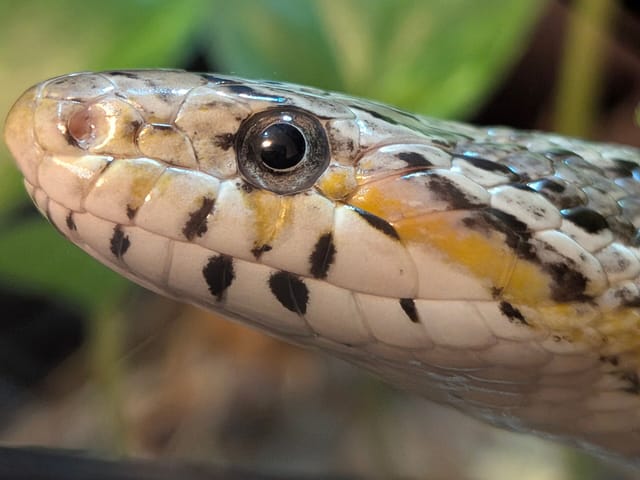
Header photo: CC0, via Wikimedia Commons.
Health questions? The Corn snakes, kingsnakes, milk snakes & rat snakes section of our health FAQ covers the problems we are asked about most. It is general hobby knowledge, not veterinary advice.
Important. These guides reflect the husbandry we use at Chaos Creatures and the published research we trust. They are not a substitute for a reptile veterinarian. If an animal is lethargic, refusing food for an extended period, has a wound or is breathing with its mouth open, see a vet.
Last reviewed Nov 11, 2026. Questions about this guide? Ask the rescue. Something wrong with the animal? Find an exotic vet near you.