
Care library › Leopard Gecko
Care guide
Leopard Gecko
Eublepharis macularius
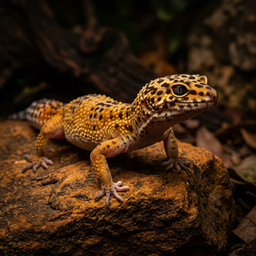
Crepuscular, terrestrial gecko native to the arid regions of South Asia (Afghanistan, Pakistan, India). Hardy and docile — one of the best beginner reptiles when kept with modern husbandry standards.
- Size7–10 inches
- Lifespan15–20+ years
- Weight50–80g
- HousingSolitary only
1. Natural History & Unique Physical Traits
- Natural Habitat: Native to the semi-desert and dry grassland regions of Afghanistan, Pakistan, India, and Nepal. In the wild, they hide from intense daytime heat inside rock crevices, animal burrows, and under loose bark.
- Size & Lifespan: Typically grow between 7 to 10 inches long (females slightly smaller). They are a long-term commitment, regularly living 15 to 20 years in captivity with proper care.
- No-Sticky-Toes Rule: Unlike many other geckos, leopard geckos lack special adhesive toe pads (setae). They cannot climb smooth glass. Instead, they have tiny claws perfect for digging and scrambling over rocks.
- Moveable Eyelids: One of the few gecko species with eyelids. They do not lick their eyes to clean them, and they close them to sleep just like humans.
- Autotomy & Brain Regeneration: If grabbed, they can detach their tail to escape. The tail slowly grows back (smoother and fatter). Fascinatingly, scientific studies show they can also regenerate brain cells!
- Folklore Myth: In parts of Pakistan, folklore falsely claims they are related to black cobras and carry a flesh-liquefying venom. In reality, they are completely non-venomous, harmless, and gentle lizards.
2. Choosing the Perfect Enclosure
- Enclosure Size: An adult requires a minimum of a 40-gallon breeder enclosure (36" x 18" x 18"). A 4' x 2' x 2' vivarium is even better. Floor space is much more important than height.
- Material Options: Glass is popular for viewing but poorly insulates heat. PVC and Wood are the modern gold standards, retaining heat efficiently.
- Screen Mesh Obstruction: If placing heat and UVB on a mesh cover, note that mesh blocks a significant percentage of light and UV radiation:
| Enclosure Brand | Light/UVB Blocked |
|---|---|
| Kages | 18% |
| Apex Cages | 20% |
| Toad Ranch | 23% |
| Dubia / Zoo Med / Thrive Screen | 33% – 35% |
| Carolina Custom / Repti Zoo / Zen Habitats | 45% |
| National Geographic / Thrive Built-in | 50% – 60% |
Strictly Solitary
Leopard geckos must live completely alone. Housing them together leads to chronic stress, bite wounds, tail drops, and resource-guarding. Even if they appear to "cuddle," they are competing for warmth.
3. Heating, Lighting, & Climate Control
- Daily Cycles: Active primarily at dawn and dusk. A clear day/night cycle is vital. Low-output UVB (UVI 0.5–1.5) like the Arcadia T5 ShadeDweller 7% is the industry standard.
- Albinos & Patternless Morphs: Lack skin pigments and have highly sensitive eyes. Keep their UVI lower (0.5 – 0.7) and provide extra physical shade. Replace UVB bulbs every 12 months.
- Temperature Gradients: Provide a warm side and a cool side for proper thermoregulation:
| Area | Ideal Temperature |
|---|---|
| Basking Surface (Hot Spot) | 94°F – 97°F |
| Warm Side Ambient (Air) | 90°F – 92°F |
| Cool Side Ambient (Air) | 70°F – 77°F |
| Nighttime Drop | Safe down to 60°F |
- Heating Methods: Halogen Flood Bulbs or Incandescent Heat Lamps (IR-A & B) are best for warming muscles. Deep Heat Projectors (DHP) work well for lightless night heat. Avoid CHEs as a primary basking source.
- Belly Heat: Place a flat, dark piece of slate stone directly under your overhead basking light. It absorbs heat and provides natural belly heat, eliminating the need for heat mats.
Avoid Colored Bulbs
Never use colored night bulbs (red or blue). Geckos see this light perfectly; it disrupts sleep patterns and causes long-term eye damage.
- Humidity & Moist Hide: Maintain baseline ambient humidity at 30% – 40%. You must provide a **Moist Hide** (70% – 80% humidity) lined with damp paper towels or soil on the warm/middle side to ensure safe shedding.
4. Safe & Unsafe Bedding (Substrate)
- Safe Substrates: Paper towels or blue shop towels are best for babies and quarantine. For healthy adults, a DIY mix of 70% organic topsoil and 30% play sand (4+ inches deep) allows natural burrowing. Bioactive mixes like Terra Sahara also work.
- Unsafe Substrates: Reptile Carpet (harbors bacteria, rips out claws/teeth), Calcium Sand / Vita-Sand (causes fatal blockages due to neutralization of stomach acid), and wood shavings/mulch/coco coir (holds too much moisture, impaction risk).
The Truth About Impaction
Impaction is not caused by safe loose substrates; it occurs when a gecko is already cold, dehydrated, or sick, causing their digestive tract to shut down. Healthy geckos with correct heating and hydration pass small amounts of swallowed soil/sand mix safely.
5. Feeding, Vitamins, & Proper Hydration
- Strict Insectivores: Cannot digest fruits, vegetables, or mammals (never feed pinky mice—the saturated fat and bones are too hard to digest).
- Daily Staples: Rotate live crickets, Dubia roaches, and mealworms.
- Occasional Treats: Silkworms, Black Soldier Fly Larvae, hornworms. Limit superworms and waxworms to once a week. Never feed wild-caught bugs.
- Schedules: Feed babies/juveniles daily; young adults every other day; healthy adults every 3 to 5 days (portion: 2 bugs per inch of body length).
- Supplementation (With UVB): Dust insects with pure calcium (no D3) most feedings. Once a week, dust with a multivitamin including low-dose D3 and Vitamin A (retinol).
- Supplementation (Without UVB): Dust insects with calcium + D3 most feedings. Dust with a multivitamin once every two weeks.
No Loose Calcium Dishes
Never leave a loose dish of calcium powder in the enclosure. Modern veterinary science has proven this leads to hypercalcemia (calcium overdose), kidney failure, and organ shutdown.
- Gut-Loading: Feed insects a high-quality commercial diet (like Repashy Superload) for 24 to 48 hours before feeding them to your gecko. Provide a shallow, sturdy bowl of fresh water daily (do not add vitamin drops).
6. Safe Handling & Deciphering Behavior
- Acclimation: Do not handle new geckos for the first 2 weeks. Let them settle in and eat consistently first.
- Socialization: After 2 weeks, place your hand flat inside for a few minutes each evening. Let them sniff your fingers. Scoop gently under the belly to lift them. Never grab the tail.
- Understanding Gecko Language:
• Clicking: Quiet, peaceful gecko communication.
• Chirping/Squeaking: Annoyance or fear. Return them to their tank.
• Barking: Intense startle response or defensiveness.
• Screaming: High-pitched defensive shriek (common in babies).
• Rapid Tail Flicking: Sinuous tail shaking indicating hunting/mating excitement.
• Slow Tail Swishing: Back arched, tiptoes, slow waving indicating anger/defense ("Leave me alone").
7. Health, Illness, & Troubleshooting
- Brumation: Natural metabolic slowdown in winter (Dec–Feb). Stop feeding 2 weeks prior to cooling so their stomach is empty. Monitor weight; abort if loss exceeds 10%.
- Metabolic Bone Disease (MBD): Preventable disease from lack of calcium/D3/UVB. Causes rubbery jaws, bowed legs, and tremors. Seek veterinary advice.
- Stick Tail (Parasites): Rapid weight loss and a shriveled tail tail from pinworms or Cryptosporidium. Isolate on paper towels and take a stool sample to an exotic vet.
- Impaction: Bloated, hard belly. Treat with lukewarm baths and a drop of olive oil on their nose to lick off. See a vet if it doesn't pass.
- Stuck Shed (Dysecdysis): Dry skin on toes, eyes, or tail. Soften in a warm, ventilated container lined with wet paper towels for 15 minutes, then gently slide off with a damp cotton swab.
- Enigma Syndrome: Congenital neurological balance disorder associated with the Enigma morph. Keep in minimalist tanks and hand-feed.
- Tail Loss: Move onto paper towels immediately. Apply pain-relief-free triple antibiotic ointment. Boost insect feeding for regeneration energy.
8. How to Determine the Sex of Your Gecko
- Determine sex once geckos reach 5 to 6 inches (around 6 months). Place them in a clear plastic container and look from underneath.
- Males: Have a distinct, V-shaped row of pre-anal pores between the hind legs, and two prominent hemipenal bulges at the base of the tail below the vent.
- Females: Lack prominent pre-anal pores and have a flat tail base without bulges.
Important. These guides reflect the husbandry we use at Chaos Creatures and the published research we trust. They are not a substitute for a reptile veterinarian. If an animal is lethargic, refusing food for an extended period, has a wound or is breathing with its mouth open, see a vet.
Last reviewed Nov 6, 2026. Questions about this guide? Ask the rescue.